Most of us have a drawer full of hair accessories: scrunchies, plain elastics, spiral ties, claw clips, bobby pins and the odd headband. Each one holds hair in a different way, and each has its moment. This guide compares scrunchies with the alternatives so you can choose the right tool for the job and treat your hair kindly.
This guide is general information written in our own words. We don't recommend particular shops, brands or products, and we never quote prices. It isn't medical advice: if you're worried about your hair or scalp, see your GP or a dermatologist.
What makes a hair accessory gentle
Before comparing, it helps to know what dermatology organisations say. The American Academy of Dermatology, DermNet and the British Association of Dermatologists all explain that hairstyles which pull tightly on the hair for long periods can cause traction alopecia, a type of hair loss. The British Association of Dermatologists notes that stopping tight styles is the key step to preventing it from getting worse. So the most important factor isn't the accessory itself, but how tightly and how often it pulls. Other factors that make a difference:
- Snag points, such as metal joins, rough seams or sharp edges, which can catch and break strands.
- Pressure area, where a hold spread over a larger area is usually more comfortable than one concentrated in a thin line.
- Repetition, meaning the same style in the same place every day.
Scrunchies
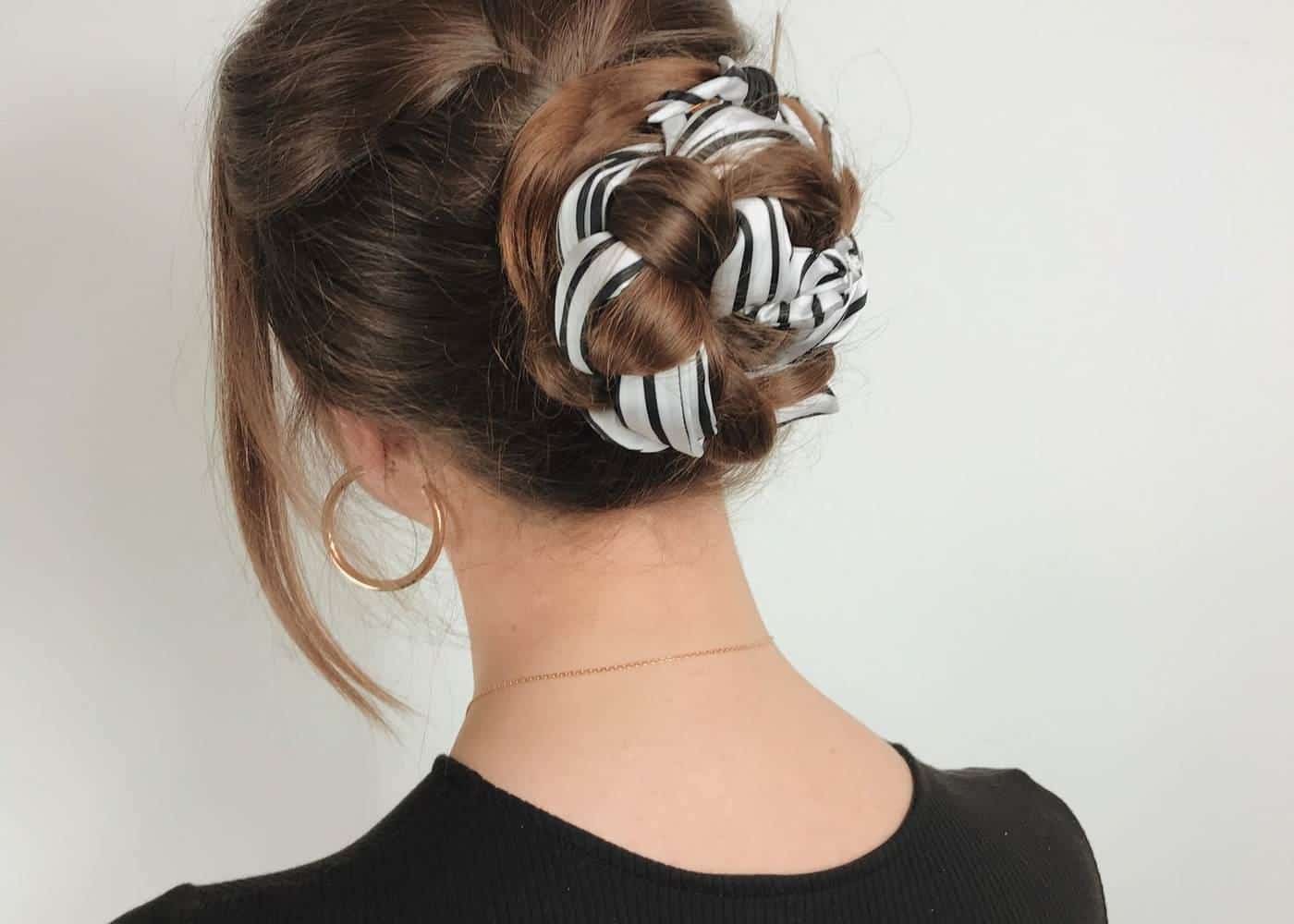
A scrunchie is a loop of elastic covered in gathered fabric. The fabric cushions the elastic, spreads the pressure and hides any join. In smooth fabrics it slides easily on and off. Scrunchies are popular for loose ponytails, buns, sleep and anyone with easily tangled hair.
Strengths: soft hold, no exposed metal, many fabrics and sizes, decorative. Limitations: bulkier than a plain tie; may slip in very fine hair; can look casual for some formal styles.
Plain elastic hair ties
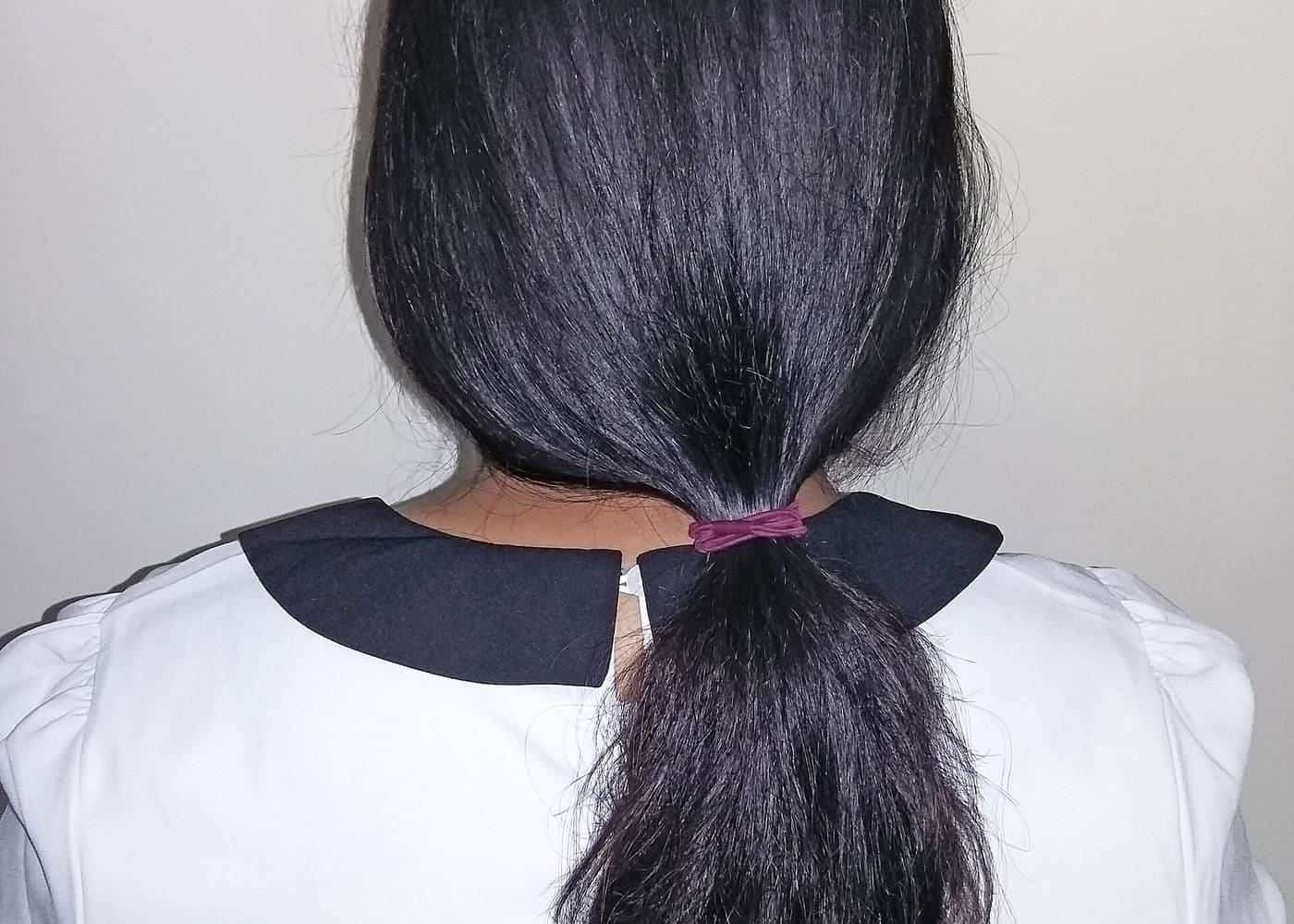
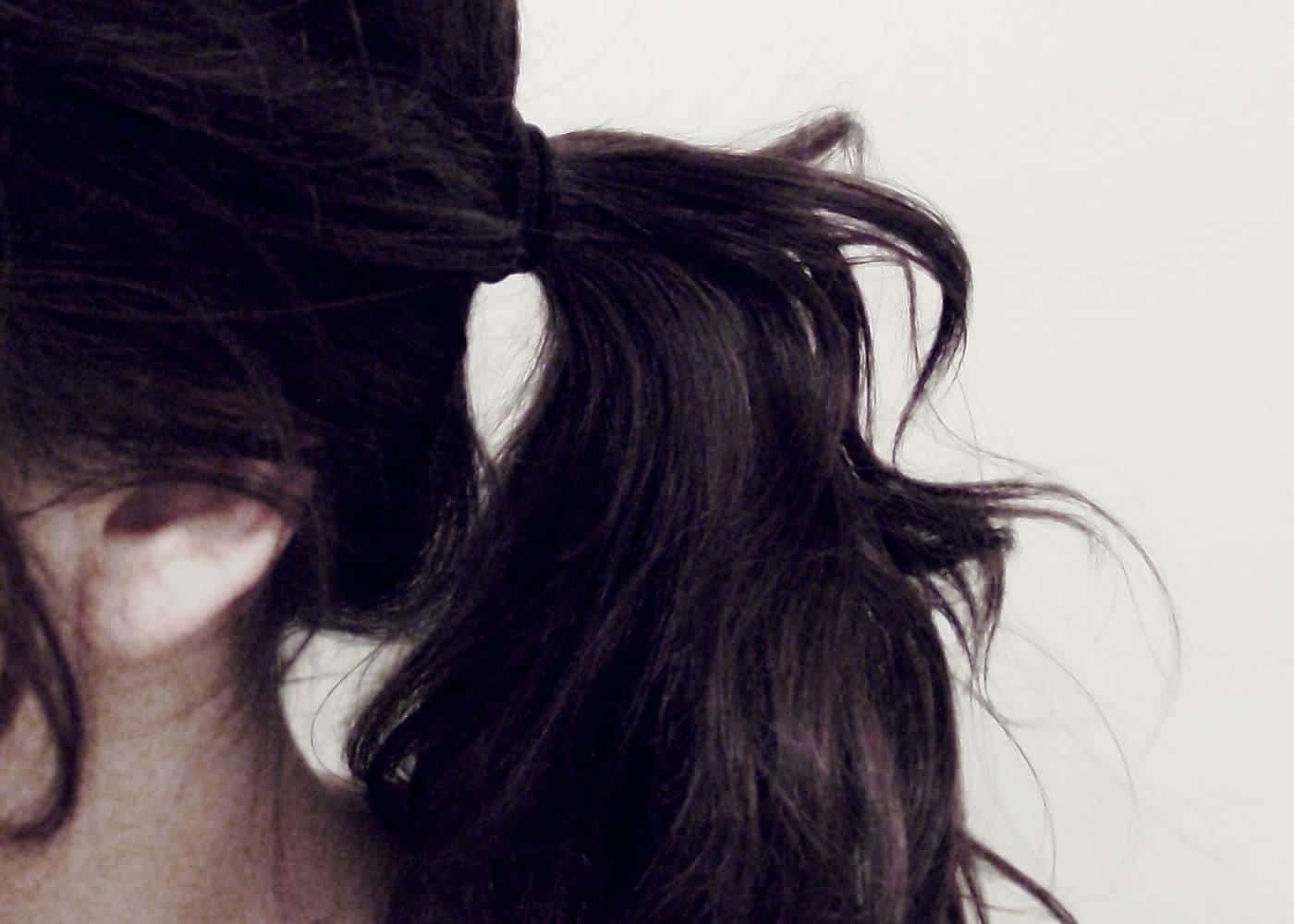
These are the thin bands sold in big packs. Older styles have a metal join that can catch hair; seamless or "no-metal" ties avoid this. They're compact, cheap and hold well.
Strengths: strong, neat hold; discreet; good for sport and braids. Limitations: concentrate pressure in a thin line; easy to wind too tight; ties with metal joins can snag.
Spiral or coil ties
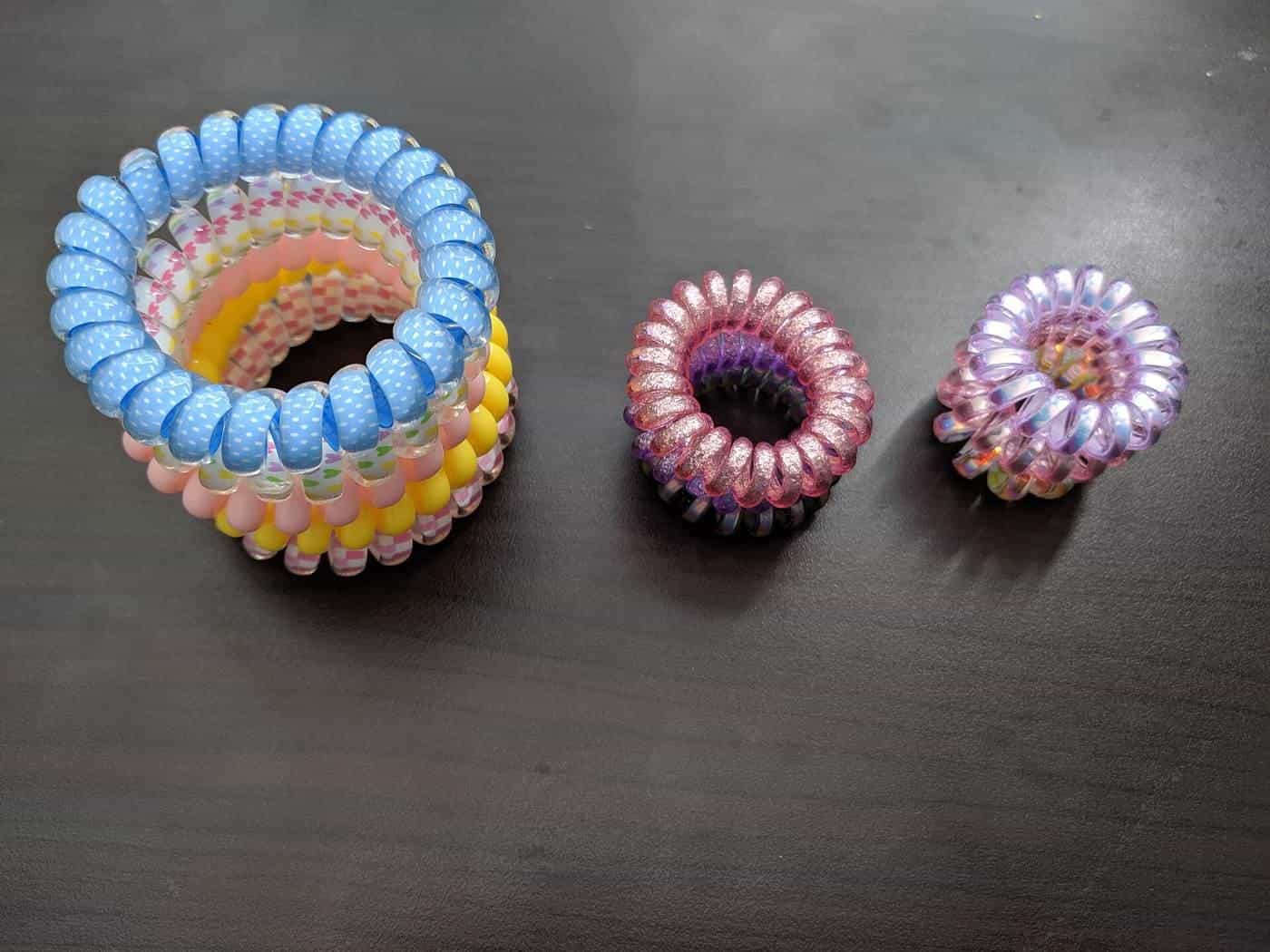
Spiral ties are coiled plastic bands that look like an old phone cord. They grip at a few points around the ponytail rather than in a continuous line, and many people find them comfortable and say they leave fewer kinks. They are waterproof, which makes them popular for swimming.
Strengths: comfortable hold for many; less denting; easy to rinse. Limitations: stretch out over time; can tangle in very fine or curly hair; some people dislike the look.
Claw clips
Claw clips grip a twist of hair with interlocking teeth, holding it up without a band around the hair. They're quick to use and popular for half-up styles and twists.
Strengths: no band; spreads the hold; quick and stylish. Limitations: can slip in thick or heavy hair; hard clips are uncomfortable to lean back on or sleep in; cheap clips can have rough edges.
Bobby pins and hairpins
Bobby pins hold small sections and secure buns and updos. Used in moderation, they're useful. Lots of pins pushed in tightly, especially along the hairline, can pull and rub. Check that the plastic tips are intact, as bare metal ends can scratch the scalp.
Headbands and wraps
Soft fabric headbands and scarves hold hair back from the face without tying it up. Tight, rigid headbands can rub behind the ears or along the hairline if worn every day, so choose a comfortable fit.
Comparison at a glance
| Accessory | Hold | Gentleness (when worn loosely) | Best for |
|---|---|---|---|
| Scrunchie | Medium | High | Everyday ponytails, buns, sleep |
| Plain hair tie | Strong | Medium | Sport, braids, neat styles |
| Spiral tie | Medium | High | Swimming, everyday |
| Claw clip | Medium | High | Twists, half-up styles |
| Bobby pins | Light | Medium | Securing buns and updos |
These are general observations, not test results. Your hair type, thickness and the way you use each accessory make the biggest difference.
Which to choose for what
- Work or school: a classic or skinny scrunchie, a seamless tie, or a claw clip.
- Exercise: a seamless tie or spiral tie that won't loosen, worn not too tight; see our sport and swimming guide.
- Sleep: a soft scrunchie worn loosely, or no tie at all; see sleeping with your hair tied.
- Curly hair: large smooth scrunchies, spiral ties or claw clips; see our curly and textured hair guide.
- Formal styles: pins and clips for updos, a skinny scrunchie for a neat bun.
Rotating accessories
Rotating between different accessories and styles is one of the simplest ways to avoid putting the same stress on the same part of your scalp every day. Wear a low scrunchie ponytail one day, a claw clip twist the next and hair down on the weekend. Changing where a ponytail sits also helps.
When to see a doctor
If you notice thinning along your hairline or where your ponytail sits, small bumps, tenderness or broken hairs, the British Association of Dermatologists recommends changing to looser styles. See your GP or a dermatologist for assessment, especially if the change continues. Early action gives the best chance of hair regrowing.
Choosing gentle versions of each accessory
Whatever accessory you prefer, small details make it kinder to your hair. Choose seamless elastics without metal joins. Run a finger around the inside of claw clips and hair slides to check for rough edges. Look for bobby pins with intact plastic tips. Choose scrunchies with neat inner seams and elastic that's joined flat. Replace anything that's stretched, cracked or fraying.
Use the scrunchie maker
Our free scrunchie maker suggests a starting fabric cut size and elastic length for skinny, classic, oversized and child-sized scrunchies, adjusted for light, medium or heavy fabric and for fine, medium or thick hair. It's a home-sewing starting point rather than a standard, so feel free to adjust. It runs entirely in your browser, and nothing you choose is sent anywhere.
Where our information comes from
Health statements in our guides are based on expert sources, including DermNet, the American Academy of Dermatology and the British Association of Dermatologists. Safety and care labelling information comes from ACCC Product Safety and the Federal Register of Legislation, and consumer rights information from the ACCC and Scamwatch. We link to each source at the end of the page, rewrite everything in our own words and show the date each guide was last checked.
A gentle scrunchie habit in one sentence
Choose a scrunchie that suits your hair, wear it loosely, move it around, give your hair days off, keep it clean and replace the elastic when it's tired. Almost everything else in this guide supports those simple habits.
Questions to ask before you buy
Before buying a scrunchie, ask yourself: what will I use it for, does the fabric suit my hair, is the elastic strong enough to hold without winding tight, are the seams neat, and can I wash it the way I like? Check product descriptions for fibre content and care instructions. Clear descriptions are a good sign of a seller who knows what they're selling.
Hair loss has many causes
Tight hairstyles are only one cause of hair loss. Genetics, hormonal changes, pregnancy, illness, some medicines, nutritional deficiencies, stress and scalp conditions can all play a part. If you notice unexplained thinning, patches or shedding, see your GP or a dermatologist rather than assuming your scrunchie is to blame. Early assessment helps.
Key points
- Tension and repetition matter more than which accessory you use.
- Scrunchies cushion the elastic and hide any join.
- Avoid ties with metal joins and clips with rough edges.
- Rotate accessories and styles to vary the pressure on your scalp.
Frequently asked questions
Are scrunchies better than hair ties?
Scrunchies spread the hold over soft fabric, which many people find gentler. A loosely worn tie can also be gentle; tension matters most.
Are spiral hair ties gentle?
They spread pressure across a few points rather than a continuous band, and many people find them comfortable. Avoid winding them too tight.
Are claw clips bad for hair?
Not generally. They hold hair without a tight band. Avoid sleeping on hard clips and check for sharp edges.
Why should I avoid ties with metal joins?
Metal joins can snag and break hair. Seamless ties or fabric-covered joins are gentler.
Sources and further reading
Facts on this page were checked against these primary and official sources. Conditions change — confirm before you travel or buy.
- Hairstyles that can lead to hair loss — American Academy of Dermatology
- Traction alopecia — DermNet
- Traction alopecia patient information leaflet — British Association of Dermatologists